
How https://chat.crushon.ai/ai-girlfriend Is Reshaping Conversational AI Companionship

How https://chat.crushon.ai/ai-girlfriend Is Reshaping Conversational AI Companionship

Conversational AI has moved far beyond simple question-and-answer bots. One of the most interesting frontiers in this space is AI companionship, where language models are tuned to hold warm, ongoing, emotionally aware conversations rather than just fetch facts. A platform that illustrates this shift clearly is https://chat.crushon.ai/ai-girlfriend, a dedicated experience built around an AI companion persona. Instead of treating chat as a utility, it treats chat as a relationship, and that design choice says a lot about where consumer AI is heading.

In this article, we will look at what an AI girlfriend experience actually involves, why people are drawn to it, how the underlying technology works, and what to consider before trying one. The goal is not to hype the concept but to explain it honestly, with attention to both its genuine appeal and its real limitations.

What an AI Girlfriend Experience Actually Is

At its core, an AI girlfriend platform is a chat application powered by a large language model that has been given a persistent persona. Rather than resetting after every message, the system is designed to remember context, adopt a consistent tone, and respond in ways that feel personal. The https://chat.crushon.ai/ai-girlfriend page sits in this category: it presents a companion-style chat where the user can talk about their day, share interests, or simply have a low-pressure conversation.

The key difference from a general-purpose chatbot is intent. A general assistant is optimized for accuracy and brevity. A companion bot is optimized for engagement, warmth, and continuity. That shift changes everything about how the model is prompted, how responses are filtered, and how the interface is designed. Emoji use, pet names, follow-up questions, and emotional mirroring all become features rather than noise.

Why Conversational Companionship Is Gaining Ground

There are several practical reasons this category has grown quickly. First, loneliness and social fatigue are real and widespread. Many people want conversation at odd hours, without scheduling, without judgment, and without the social cost of reaching out to a friend who might be busy. An AI companion offers availability that human relationships simply cannot match.

Second, the barrier to entry is low. There is no app store download, no subscription conversation, and no awkward introduction. You open a browser, start typing, and the conversation begins. That frictionless entry point is a big part of why platforms like this attract curious users who might never have sought out a traditional chatbot.

Third, the technology finally feels good enough. Earlier rule-based bots produced stilted, repetitive replies that broke immersion within minutes. Modern language models can sustain tone, recall earlier details, and generate responses that feel spontaneous. The experience is still artificial, but it is no longer obviously robotic in the first few exchanges.

How the Technology Behind It Works

Under the hood, most AI companion platforms combine three layers. The first is the base language model, which handles language understanding and generation. The second is a persona layer, usually implemented through system prompts and fine-tuning, which defines the companion’s name, personality, backstory, and conversational style. The third is a memory layer, which stores facts the user has shared so the companion can reference them later.

The memory layer is where things get technically interesting. Short-term memory lives inside the context window, meaning the model can see recent messages. Long-term memory requires a retrieval system that stores summaries or embeddings of past conversations and injects the relevant parts back into the prompt when needed. This is what allows a companion to remember that you mentioned a job interview last week and ask how it went.

Safety and moderation layers also sit on top. These filter harmful content, enforce age-appropriate boundaries, and keep the interaction within the platform’s stated policies. For anyone evaluating a companion platform, the presence of clear moderation is a positive signal, not a limitation.

What Makes a Companion Chat Feel Natural

Naturalness in companion chat comes down to a handful of design details. Response length matters: replies that are too long feel like essays, while replies that are too short feel dismissive. Emotional attunement matters: a good companion matches the user’s energy rather than ignoring it. Continuity matters: referencing earlier topics makes the conversation feel like a relationship rather than a series of disconnected prompts.

Another subtle factor is imperfection. A companion that always agrees and always compliments quickly feels hollow. Slight pushback, playful teasing, and genuine curiosity make the interaction feel more human. The best companion platforms calibrate this balance carefully, and it is one of the hardest parts of the design to get right.

Practical Uses Beyond Romance

Although the category is marketed around romantic companionship, the actual use cases are broader. Some users treat an AI companion as a safe space to practice social skills or rehearse difficult conversations. Others use it for language practice, since a patient conversational partner who never gets bored is genuinely useful for learners. Some simply enjoy having a consistent, low-stakes chat partner at the end of a long day.

There is also a creative angle. Writers and role-players use companion-style bots to explore character voices and dialogue. Because the model can sustain a persona across many turns, it works surprisingly well as an improvisation partner. These uses are less discussed than the romantic framing, but they are a meaningful part of why the format persists.

Limitations and Ethical Considerations

It is important to be honest about what an AI companion is not. It does not have feelings, consciousness, or genuine attachment. It generates text that statistically resembles affection, which can feel meaningful but is not reciprocal in any real sense. Users who keep this distinction clear tend to have a healthier experience than those who blur it.

There are also privacy considerations. Conversations with a companion can be personal, and users should understand how their data is stored, whether it is used for training, and how it can be deleted. Reading the platform’s privacy policy before sharing sensitive details is basic digital hygiene, not paranoia.

Finally, there is the question of balance. An AI companion can be a pleasant supplement to social life, but it should not replace human connection entirely. Platforms that encourage healthy use, provide clear boundaries, and avoid manipulative engagement tactics are the ones worth supporting.

How to Evaluate a Companion Platform

If you are considering trying one of these services, a few criteria can help you judge quality quickly. Look at response latency, since slow replies break immersion. Check whether the companion remembers earlier parts of the conversation. Test how it handles a change of topic or a moment of disagreement. And review the platform’s moderation and privacy documentation.

It also helps to go in with realistic expectations. Treat the first few messages as a calibration period. The companion will not know your preferences immediately, and the experience improves as the conversation develops. Patience and clear communication make a noticeable difference.

Frequently Asked Questions

Is an AI girlfriend the same as a regular chatbot?

No. A regular chatbot is optimized for accurate answers to specific questions. An AI girlfriend platform is optimized for sustained, emotionally toned conversation with a consistent persona. The underlying language model may be similar, but the prompting, memory, and interface are designed around companionship rather than information retrieval.

Does the AI actually remember past conversations?

Many modern platforms include a memory layer that stores summaries or key facts from earlier chats and reintroduces them when relevant. The quality of this memory varies by platform. Short-term context is nearly universal, while long-term recall depends on how the memory system is implemented.

Can an AI companion replace human relationships?

It should not be treated as a replacement. An AI companion can offer convenient conversation and a judgment-free space to talk, but it does not provide genuine mutual care, shared experience, or the growth that comes from real relationships. It works best as a supplement, not a substitute.

What should I check before sharing personal information?

Review the platform’s privacy policy to understand what data is collected, how it is stored, whether it is used for model training, and how you can request deletion. If those details are unclear or unavailable, be conservative about what you share.

Is this kind of chat suitable for everyone?

It is intended for adults and works best for users who approach it with clear expectations about what the technology can and cannot do. Anyone who finds themselves relying on it in place of human connection, or who feels distressed by the interaction, should step back and consider speaking with a professional.

Final Thoughts

Conversational AI companionship is a genuine and growing category, not a passing gimmick. Platforms like the one at https://chat.crushon.ai/ai-girlfriend show how far language models have come in sustaining a persona and a mood across a long conversation. Whether that experience appeals to you personally depends on your expectations, but understanding how it works and where its boundaries lie is the best way to engage with it thoughtfully. Used with clear eyes, it can be an interesting and even enjoyable application of modern AI.

Inside https://crushon.ai/ai-sex-chat: How Conversational AI Companions Are Reshaping Digital Intimacy

Inside https://crushon.ai/ai-sex-chat: How Conversational AI Companions Are Reshaping Digital Intimacy

Conversational AI has moved far beyond customer support scripts and weather bots. A growing segment of users now turns to AI platforms for companionship, roleplay, and private adult conversation. One of the more visible destinations in this space is https://crushon.ai/ai-sex-chat, a product built around the idea that a chat window can feel less like a tool and more like a relationship. This article examines what that experience actually looks like, why it resonates with so many people, and what anyone considering an AI companion platform should understand before diving in.

What an AI Companion Platform Actually Is

At its core, an AI companion platform is a large language model wrapped in a personality. Instead of answering a single factual question and stopping, the system maintains context across a conversation, remembers details you share, and adapts its tone to match the mood of the exchange. The difference between a generic chatbot and a companion experience is not the underlying technology alone. It is the design decisions layered on top: character backstories, memory systems, emotional pacing, and the freedom to steer a conversation in directions a mainstream assistant would refuse.

Crushon’s adult chat offering sits squarely in that second category. It is designed for users who want sustained, unfiltered interaction rather than one-off answers. That distinction matters because it changes the entire user journey. You are not searching for information. You are building a narrative with a character who responds to you specifically.

Why Conversational Intimacy Is Having a Moment

Several cultural and technical trends have converged to make AI companionship mainstream rather than fringe. Loneliness research has consistently shown that a large share of adults report limited close relationships, and the pandemic years accelerated that isolation for many people. At the same time, language models became dramatically better at holding a coherent, emotionally textured conversation. The result is a product category that meets a real need with technology that finally feels capable of meeting it.

There is also a practical appeal. Human relationships carry risk: rejection, awkwardness, mismatched expectations, and the effort of coordinating schedules. An AI companion removes most of that friction. It is available at any hour, it does not judge, and it never gets tired of the conversation. For some users that is a temporary outlet. For others it becomes a genuine part of their routine.

Critics argue this is a retreat from real connection. Supporters counter that the same critique was once leveled at novels, television, and video games. The honest answer is probably somewhere in between, and it depends heavily on how the individual uses the platform.

What Sets the Crushon Adult Chat Experience Apart

The most obvious differentiator is the character roster. Rather than a single assistant with a fixed voice, the platform offers a wide range of personas, each with its own personality, background, and conversational style. That variety matters because attraction and comfort are highly personal. A user who finds one character cold may click instantly with another.

Memory is the second pillar. A companion that forgets your name, your job, or the story you built together last week breaks the illusion immediately. Modern companion platforms invest heavily in retaining context so the relationship feels continuous rather than episodic. When memory works well, conversations develop inside jokes, recurring themes, and a sense of shared history.

The third pillar is freedom of expression. Adult chat platforms exist because many users want conversations that mainstream assistants block or water down. That openness is the entire point of the category, and it is why users seek out dedicated platforms instead of trying to bend a general-purpose chatbot to their needs.

How the Conversation Flow Typically Works

Most users start by browsing available characters and picking one that matches their mood or fantasy. From there, the interaction is open-ended. You might begin with a simple greeting and let the character take the lead, or you might set up a scenario and invite the character to play a role within it. The best experiences feel collaborative rather than scripted.

Over time, users tend to develop preferences. Some gravitate toward slow-burn emotional connection, while others prefer direct and playful exchanges. Because the model responds to your input, the tone of the conversation is largely in your hands. That responsiveness is what separates a satisfying session from a flat one.

It is worth noting that quality varies by character and by how much effort the user puts in. A one-word message rarely produces a rich reply. Users who write in fuller sentences and give the character something to react to consistently report better results.

Privacy, Safety, and Responsible Use

Any conversation of an intimate nature raises legitimate privacy questions. Users should read the platform’s privacy policy carefully and understand what data is stored, how long it is retained, and who can access it. Reputable platforms are transparent about this. If a service is vague about data handling, that is a warning sign.

Responsible use also means keeping expectations grounded. An AI companion can be engaging, comforting, and fun, but it is not a substitute for human relationships in every context. Users who treat it as one outlet among many tend to have a healthier experience than those who rely on it exclusively.

Age verification and content boundaries are another consideration. Adult platforms should have clear mechanisms to prevent minors from accessing explicit material. Users should also be mindful of how much personal identifying information they share, even with a system that feels trustworthy.

The Technology Behind the Personality

Underneath the character layer sits a transformer-based language model fine-tuned for dialogue. These models predict the next token in a sequence, but the training and prompting around them determine whether the output feels warm, distant, witty, or flat. Companion platforms typically combine a base model with retrieval systems that pull relevant memories into the prompt, plus safety filters that are tuned differently than those on general assistants.

Latency matters more than people realize. A reply that takes ten seconds to appear breaks immersion. Platforms that invest in infrastructure to keep responses fast tend to feel noticeably more alive. Similarly, consistency across a long conversation requires careful prompt engineering and memory management, which is why some platforms feel coherent over weeks while others drift.

Voice and image features are the next frontier. Some companion platforms already allow characters to speak or generate images, and that trend is likely to expand. Each new modality deepens immersion but also raises new questions about consent, representation, and authenticity.

Who Tends to Use AI Companion Platforms

The user base is more diverse than stereotypes suggest. It includes people in long-distance relationships, shift workers with irregular schedules, individuals exploring fantasies they are not ready to share with a partner, and people who simply enjoy creative roleplay. Some users are curious and try it once. Others become long-term regulars.

What unites them is a preference for a low-pressure environment where they can express themselves without fear of judgment. That is a real psychological need, and it is not inherently unhealthy. The key is honesty with oneself about why the platform is being used.

Evaluating Whether a Platform Is Right for You

Before committing time or money to any AI companion service, consider a few practical questions. Does the platform offer a free tier so you can test the experience? Are the characters varied enough to find one that fits your taste? Is the pricing transparent, and are there hidden limits on messages or memory? Does the privacy policy clearly explain data practices?

It also helps to check how active the community is. Platforms with engaged user bases tend to iterate faster and respond to feedback. A quick look at forums, reviews, and social channels can reveal whether a service is thriving or stagnating.

Finally, be honest about your own goals. If you want entertainment, a companion platform can deliver that immediately. If you are looking for something deeper, the experience will depend on how much you invest in the conversation and how well the platform supports continuity.

The Road Ahead for Conversational Companionship

This category is evolving quickly. Better memory, multimodal interaction, and more nuanced emotional modeling are all on the near-term horizon. Regulation will likely follow, particularly around age verification and data protection. How platforms navigate that balance will determine which ones survive the next few years.

For now, services like Crushon represent an interesting snapshot of where the technology stands: capable enough to feel genuinely engaging, imperfect enough to remind users they are talking to a model. Whether that combination delights or disappoints depends largely on what the user brings to the conversation.

FAQ

Is Crushon’s adult chat free to try?

Many AI companion platforms offer a limited free tier so users can test the experience before paying. Check the current pricing page for the most accurate details on message limits and premium features.

How private are AI companion conversations?

Privacy depends on the specific platform’s policy. Look for clear statements about data storage, retention periods, and whether conversations are used for training. Avoid services that are vague about these points.

Can an AI companion remember past conversations?

Memory systems vary widely. Some platforms retain long-term context so characters recall details across sessions, while others only remember within a single chat. Memory quality is one of the biggest factors in how immersive the experience feels.

Are AI companion platforms safe for adults?

They can be, provided users read the privacy policy, avoid sharing sensitive personal information, and keep expectations grounded. Responsible use means treating the platform as one form of entertainment rather than a replacement for all human connection.

How the Freighter Wallet Freighter Wallet App Transforms Stellar Asset Management

How the Freighter Wallet Freighter Wallet App Transforms Stellar Asset Management

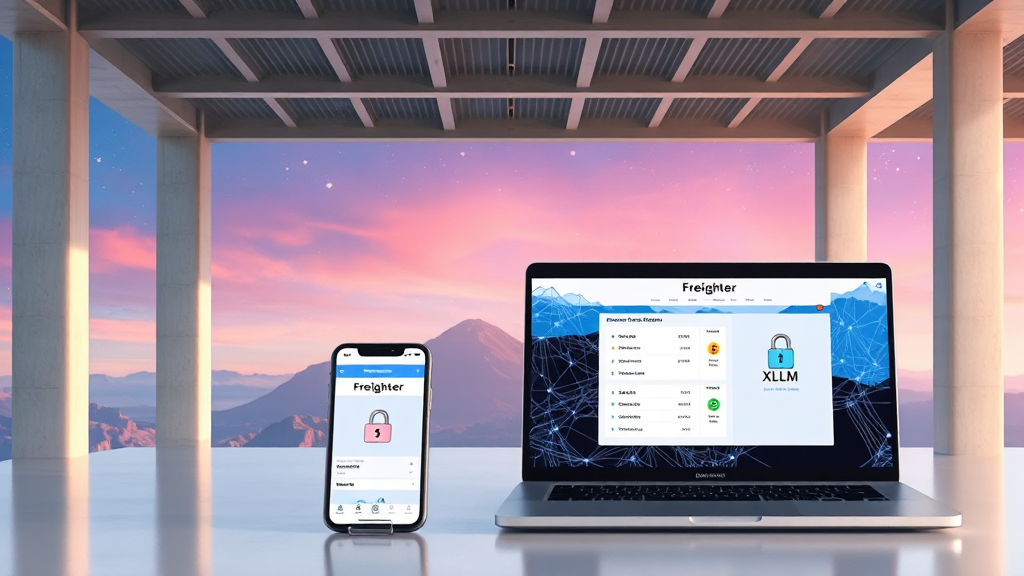
In the rapidly evolving world of blockchain technology, managing digital assets securely and efficiently has become a top priority for both newcomers and seasoned crypto enthusiasts. Among the many tools available, the freighter wallet freighter wallet app stands out as a dedicated solution for the Stellar network. Unlike generic multi-chain wallets that try to do everything, Freighter is purpose-built for Stellar, offering a streamlined experience for sending, receiving, and interacting with Stellar-powered applications. This article explores how this browser-based and mobile wallet simplifies asset management while maintaining a strong emphasis on security and user control.

Why a Dedicated Stellar Wallet Matters

The Stellar network is designed for fast, low-cost cross-border payments and tokenized asset transfers. However, to fully leverage its capabilities, users need a wallet that understands Stellar’s unique features—such as trustlines, anchors, and decentralized exchange (DEX) integration. A generic wallet often provides a clunky experience or lacks support for Stellar-specific operations. The Freighter wallet solves this by focusing exclusively on Stellar, ensuring that every feature is optimized for the network’s architecture.

For example, Stellar requires users to establish trustlines before they can hold certain assets. Freighter simplifies this process with a clear, intuitive interface that guides users through the necessary steps. This level of specialization is crucial for anyone who regularly transacts in Stellar-based assets like USDC or lumens (XLM). By choosing a dedicated wallet, users avoid the confusion that often arises when juggling multiple blockchain protocols in a single app.

Core Features of the Freighter Wallet

The Freighter wallet is more than just a place to store coins; it is a full-featured gateway to the Stellar ecosystem. One of its standout features is the ability to browse and connect to Stellar apps directly from the wallet interface. This means users can seamlessly interact with decentralized applications (dApps) built on Stellar, such as lending platforms, payment gateways, and NFT marketplaces, without needing to leave the wallet environment.

Additionally, the wallet supports instant sending and receiving of Stellar assets. Whether you are transferring USDC to a friend or paying for a service with XLM, the transaction process is straightforward. The wallet also displays transaction history and balances in real time, giving users a clear overview of their portfolio. For those who manage multiple accounts, Freighter allows you to create and switch between accounts effortlessly, making it a practical choice for power users.

Security at the Forefront: Non-Custodial Control

Security is the cornerstone of any reputable cryptocurrency wallet, and Freighter does not disappoint. As a non-custodial wallet, it ensures that users have complete control over their private keys. This means that Freighter never stores or has access to your funds; instead, all sensitive data is encrypted and stored locally on your device. When you use the freighter wallet freighter wallet app, you are the sole custodian of your assets, reducing the risk of exchange hacks or insider theft.

The wallet employs industry-standard encryption protocols to protect your keys. Additionally, it offers a recovery phrase feature, enabling users to restore their wallet if they lose access to their device. This phrase must be stored securely offline, as anyone with access to it can control your funds. Freighter also integrates with hardware wallets for an extra layer of security, allowing users to sign transactions without exposing their private keys to the internet. This combination of software and hardware security measures makes Freighter a reliable choice for both small and large holdings.

User Experience and Accessibility

Freighter is designed with the user in mind, offering a clean and uncluttered interface that is easy to navigate, even for those who are new to Stellar. The onboarding process is simple: you create a new wallet or import an existing one using your recovery phrase. Once set up, you are greeted with a dashboard that displays your account balance, recent transactions, and a quick-access menu for sending and receiving assets.

The wallet is available as a browser extension for Chrome, Firefox, Edge, and Brave, making it accessible directly from your desktop browser. Additionally, Freighter offers a mobile app for iOS and Android, ensuring that you can manage your assets on the go. This cross-platform availability is a significant advantage, as it allows users to synchronize their wallet across devices without sacrificing security. The mobile app mirrors the desktop experience, so you can switch between your phone and computer with ease.

Connecting to Stellar Apps and DeFi

One of the most powerful aspects of Freighter is its ability to connect to a growing ecosystem of Stellar applications. Through the wallet’s built-in dApp browser, users can explore and interact with projects that are building on Stellar. This includes decentralized exchanges, token issuance platforms, and even charitable donation platforms that leverage Stellar’s low fees.

For instance, imagine you want to trade a token on a Stellar-based DEX. Instead of manually copying wallet addresses and signing transactions, you can simply connect your Freighter wallet to the DEX and approve trades with a few clicks. This integration is made possible by Stellar’s Web Authentication (SEP-10) and transfer protocols, which Freighter fully supports. By acting as a bridge between users and the Stellar network, the wallet enhances the overall usability of the ecosystem and encourages wider adoption of Stellar-based solutions.

Comparing Freighter with Other Wallets

When compared to multi-chain wallets like MetaMask or Trust Wallet, Freighter’s specialization is both its strength and its limitation. While MetaMask supports Ethereum and other EVM-compatible chains, it does not natively support Stellar’s unique features. Freighter fills this gap by providing a seamless experience for Stellar users. However, if you hold assets on multiple blockchains, you may need to use several wallets, which can be cumbersome.

That said, for anyone whose primary focus is Stellar, Freighter is arguably the best option available. Its user-friendly design, robust security, and deep integration with the Stellar ecosystem make it a superior choice compared to using a generic wallet that treats Stellar as an afterthought. The wallet’s team is also actively involved in the Stellar community, ensuring that it stays up to date with the latest network upgrades and standards.

Getting Started with Freighter

If you are ready to take control of your Stellar assets, getting started with Freighter is straightforward. Visit the official website and download the extension for your browser or the mobile app for your device. After installation, you will be prompted to create a new wallet or import an existing one. Be sure to write down your recovery phrase and store it in a safe place—this is the only way to recover your funds if you lose access.

Once your wallet is set up, you can fund it by sending XLM or other Stellar assets to your public address. From there, you can begin sending and receiving payments, exploring Stellar apps, and participating in the network’s vibrant ecosystem. For those who want to learn more, the Freighter website provides comprehensive guides and FAQs that cover common questions and troubleshooting tips.

Frequently Asked Questions

Is Freighter wallet safe to use?

Yes, Freighter is a non-custodial wallet, meaning you have full control over your private keys, and they never leave your device. The wallet uses strong encryption and supports hardware wallet integration for added security. As with any crypto wallet, it is essential to keep your recovery phrase safe and never share it with anyone.

Can I use the Freighter wallet for multiple Stellar accounts?

Absolutely. Freighter allows you to create and manage multiple Stellar accounts within the same wallet interface. This is useful for separating personal funds from business transactions or for managing different projects. You can switch between accounts easily and even label them for better organization.

Does the Freighter wallet support assets other than XLM?

Yes, Freighter supports all Stellar-based assets, including anchored currencies like USDC and other tokens issued on the network. To hold a new asset, you must first add a trustline, which Freighter simplifies through its user interface. This ensures you can manage a diverse portfolio within the Stellar ecosystem.

Can I connect Freighter to my hardware wallet?

Yes, Freighter integrates with popular hardware wallets such as Ledger. This allows you to sign transactions securely using your hardware device while still enjoying the convenience of Freighter’s interface. This is a recommended approach for users with larger holdings, as it adds an extra layer of protection against online threats.

Conclusion

The freighter wallet freighter wallet app is an essential tool for anyone actively using the Stellar network. Its dedicated approach, combined with robust security and a user-friendly experience, positions it as a leading wallet in the Stellar ecosystem. Whether you are a casual user sending a few lumens or a developer building on Stellar, Freighter provides the necessary infrastructure to manage your digital assets with confidence. As the blockchain space continues to mature, having a specialized, secure wallet like Freighter is not just an option—it is a necessity.

Readers who are interested in this topic will benefit from exploring multiple perspectives and understanding the nuanced approaches that industry leaders recommend. Taking time to research thoroughly ensures better outcomes and more informed decision-making.

Those looking to gain deeper knowledge in this area should consider following expert analysis, staying updated with the latest developments, and engaging with professional communities where these topics are discussed in detail.

A comprehensive understanding of this subject requires looking at both theoretical foundations and practical applications. By combining study with hands-on experience, learners can develop a well-rounded perspective that serves them well in real-world scenarios.

As the landscape continues to shift and evolve, staying informed about emerging trends and best practices becomes increasingly valuable. This ensures you remain competitive and capable of adapting to new challenges as they arise.